

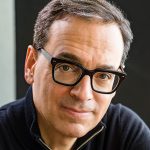









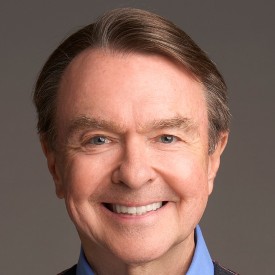
Below, Michael Clinton shares five key insights from his new book, Longevity Nation: The People, Ideas, and Trends Changing the Second Half of Our Lives.
Michael is the former president and publishing director of Hearst Magazines and currently serves as special media advisor to the CEO of the Hearst Corporation. He has traveled to more than 100 countries, run marathons on all seven continents, and is a leading voice on how longer lifespans are reshaping the way we live and work through his company Roar Forward, a business focused on new longevity.
What’s the big idea?
We are entering a profound new chapter in human history: the age of longer lives. In Longevity Nation, Michael Clinton explores how advances in medicine, technology, urban design, work, and personal health are reshaping not only how long we live, but how we live those extra years. The 100-year life is no longer science fiction; it is becoming a realistic possibility for millions. But longer lives will demand new systems, new habits, and new ways of thinking about everything from retirement to community to purpose. Clinton’s central message is both optimistic and urgent: the future of longevity is coming fast, and the question is whether we’ll be ready for it.
Listen to the audio version of this Book Bite—read by Michael himself—in the Next Big Idea App, or buy the book.


1. The new longevity era is here.
100 years ago in the US, life expectancy was 62 years old. In Europe, it was less than 60 years old, and in many Asian countries, it was less than 50 years old. Due to the developments of vaccines and antibiotics, cleaner water, a better food supply, and waste disposal. We’ve seen more growth in life expectancy since the early 20th century than at any time in all of history combined. Today in the US, the average life expectancy hovers around 80, and it is higher in many European and Asian countries. Women, who generally live five to six years longer than men, are approaching life expectancies in the mid to late 80s in places like Hong Kong, Japan, and Korea.
Life expectancies of mid to late 80s in places like Hong Kong, Japan, and Korea, and it is anticipated that in a few years, women in those countries will exceed 90 years old as life expectancy in those countries continues to grow. Across the globe, living longer is becoming the human experience and will continue to grow in the years to come. As part of the new longevity, it is projected that we will also begin to see the normalization of the 100-year life. Today, there are about 770,000 centenarians worldwide, and the UN projects that by 2100, there will be over 25 million people aged 100 or older. Multiple studies also project that today’s five-year-old, assuming good healthcare, will have a 50 percent chance of living to 100. While it is all an exciting prospect, it has huge implications for the world at large.
All of our institutions and structures will have to adapt to this phenomenon. Governments and businesses will have to rethink how to accommodate this massive demographic expansion. Healthcare and social support systems will need to be available to everyone, as will ways to ensure financial security for longer lives. It is all the opportunity and the challenge of a new longevity.
2. New medical breakthroughs enabled by AI and technology will manifest the 100-year life.
We’re in a new golden age of medicine and diagnostics that will lead to new approaches to preventive healthcare, allowing us to identify issues early, get on a path to early treatment, and extend lives. Measurements from wearables and other longevity technologies will track our core health metrics in new, more comprehensive ways. New types of medical and biomarker tests, along with a focus on genomics and data, all enabled by AI, will lead to the advent of precision medicine for the individual. The ability to compare an individual’s cancer with millions of data points from others at the same age and stage will lead to a personalized subset of therapeutics for treatment. Drug development, such as GLP-1s, Metformin, Farxiga, and others, is showing promise of leading to a delay in aging for human beings.
“The longevity innovators in science, medicine, and technology are ushering in a new era of human possibility.”
Ozempic and Mounjaro, two GLP-1 drugs, not only treat obesity but also show promise as longevity drugs, as they reduce inflammation and improve cardiovascular outcomes and organ function. We’re only at the beginning of new drug discoveries being developed for longer, healthier lives. There are also several moonshot projects underway to develop a vaccine to slow the aging process at the cellular level.
According to Rajon Naj at Stanford, in the future, we won’t do drug trials anymore, but go right to AI-proven drug solutions. AI-driven approaches will also help identify the root causes of aging itself, slowing down cardiovascular disease and neurodegeneration. Today, there are already two FDA-approved disease-modifying drugs for Alzheimer’s to slow down cognitive decline in people with early symptoms. There’s also a robust pipeline of about 140 drugs in various stages of development that we fast-tracked with artificial intelligence.
The longevity innovators in science, medicine, and technology are ushering in a new era of human possibility. While no individual has lived longer than 122 years, the belief is that we will break through that barrier. Dr. David Sinclair at Harvard and others already believe that the first person to live to 150 years has been born.
3. In the new longevity era, we will live in new and inventive ways to support our longer lives.
Around the world, more and more older people will outnumber younger people. Due to declining birth rates in over 150 countries, the shift to older people continues to grow. By the early 2030s, there will be more people aged 65 and older in the US than those under 18, and the same will be true in other countries. Governments across the globe, including states, cities, and communities, will need to rethink urban planning, infrastructure, transportation, housing, and social services to accommodate the needs of this changing citizenry. A beacon of inspiration is the nation-state of Singapore, which has already begun to address this shift. From designing public housing to be more age-inclusive, to incorporating universal design into multi-generational flats called the 3G flat, the $3 billion action plan for successful aging is in full swing.
Places like Fujisawa in Japan are being redesigned as age-friendly cities, as are projects such as the City of Longevity in Newcastle, UK, and the new Longevi-city in Ras Al-Kama, United Arab Emirates, which will include cutting-edge advances in healthcare, technology, and community development to promote longer, healthier lives. The World Health Organization’s global network for age-friendly cities was established in 2010 to help leaders adapt to their aging populations. As of date, over 1,600 cities and communities from 52 countries are engaged in sharing best practices.
In the US, the Age Inclusive American Cities Guidebook is a new initiative that explores how states and cities can incentivize businesses to partner in age-friendly initiatives and how city planners, architects, zoning officials, and others can join the movement. Developers and real estate executives are also forming alliances to address new ways of living that will enhance the aging in place trend and to establish multi-generational housing and communities that integrate older and younger people in natural living environments.
“We are just beginning to create new ways to live as dynamic older people.”
Ghettoizing older people in nursing homes across more than 55 communities will become outdated models for living as technology and new kinds of communities, such as Mirabella at Arizona State University and Urban Ear, continue to grow and promote healthier intergenerational living.
With the expansion of smart homes enabled by AI technology and advances in telemedicine, many individuals will also be able to track their health metrics, connect them directly to their physicians, find solutions to isolation and loneliness through robotic companions, and be more mobile with exoskeleton devices. We are just beginning to create new ways to live as dynamic older people.
4. The redefinition of the workplace and the reframing of retirement.
If someone is 65 and healthy, they may live another 30 or more years. It should prompt a complete rethink of what was once viewed as the traditional retirement, a construct created in the early 20th century when life expectancies were shorter. Today, people need to work longer or work in new ways to maintain financial security for a 100-year life. The workplace model of the 20th century is no longer relevant in the new longevity era. Instead of thinking about moving people out in their 60s, companies need to restructure and explore ways to retain, retrain, and promote older talent, tapping into their experience and wisdom to sustain productivity.
A great example of a workplace innovator is L’Oréal, the global beauty company. Its initiative, L’Oréal for All Generations, is designed to keep employees in place well into their 60s and beyond, recognizing that 65 is no longer the number to end a career. With an additional 30 years of life, individuals may not want to work in the same profession or in the same way. New work approaches include the portfolio life, returnships, and fractional roles, all part of the future work models of the new longevity era. While some of this is in response to the need to earn money to fund a longer life, it also reflects the importance of purpose and engagement, an important element for a longer human life. This is leading to a growing trend of entrepreneurship among older people who launch businesses in their 50s, 60s, and later.
Data from the Kaufman Foundation showed that more than 25 percent of new entrepreneurs were between the ages of 55 and 64, a substantial increase from about 15 percent in 1996. The future of work will continue to evolve in the new longevity era. With longer lives, the 60-year career will become a new reality, but it will look very different from what has existed in the past.
5. You have more control over your personal longevity than you might think.
While new studies continually report findings, the scientific and medical communities are in unison that genetics account for about 25 percent of our individual longevity. There are some exceptions, with certain ethnic groups that may have what is called the longevity gene, but that is rare. Dr. Nir Barzola at Einstein College of Medicine in New York has studied Ashkenazi Jewish centenarians since the mid-1990s, who are a great example of one of these unique population groups. But with 75% of our longevity in our control, how can we put ourselves on a path to a long and healthy life, regardless of what number we reach? I personally am going for 100. A whole industry has developed to promise ways to ensure our longevity, whether through supplements, peptides, NAD+ replenishment, and more.
“The number one focus for healthy longevity is the consistent need for movement and exercise.”
Yet there are still some very fundamental longevity hacks that have proven to be tried and true. The number one focus for healthy longevity is the consistent need for movement and exercise. As Dr. Mark Lacks from New York’s Weill Cornell Medicine says, “Motion is lotion.” Regardless of your preferred exercise, a minimum of 150 minutes a week of moderate aerobic exercise, including two days of resistance training for at least 30 minutes, is the right minimum. As Dr. Michel Frederickson at Stanford University says, “We should do this from the age of 18 until our last day on earth.” Combine that with what some call conscious consumption, a diet focused on plant-based foods packed with protein from beans, legumes, tofu, eggs, fish, and more. Move away from processed foods, eat less, and be mindful of the levels of alcohol and sugar you consume.
Good sleep may be one of the hidden superpowers for a healthier life. A commitment to sleep hygiene practices provides us with important REM and deep sleep cycles aligned with our chronotype. Let’s do that again. Being well-rested has positive impacts on our mind, body, and spirit. The importance of purpose remains essential to the human condition. As we live longer, we need to be engaged and fulfilled, with commitments to ideas and actions that give us a sense of being connected to the world. That, along with lifelong healthy relationships with people of all ages in both our family and social circles, helps avoid isolation and loneliness, leading to stronger mental health, an important factor in our healthy lifespan.
While there are many other longevity hacks, it is ultimately our responsibility to put ourselves on a path that makes us longevity-ready. Augmented by new medical developments and medicines, all fueled by AI and technology, the healthy 100-year life is a real possibility. The question is, will you be ready?
Enjoy our full library of Book Bites—read by the authors!—in the Next Big Idea App: