












Below, David Treuer shares five key insights from his new book, The Savage Mind: An American Legacy.
David is an Ojibwe Indian from the Leech Lake Reservation in northern Minnesota and a professor of English at the University of Southern California. His previous books have won several awards, and his writing has appeared in The New York Times, the Los Angeles Times, The Atlantic, The Washington Post, and Harper’s.
What’s the Big Idea?
America’s violence is not senseless. Its roots lie in the conquest of Native land and the exploitation of people, and its legacy continues to shape who we are. By learning to see our history differently, we can begin to change our future.
Listen to the audio version of this Book Bite—read by David himself—in the Next Big Idea App, or buy the book.


1. Nonfiction is an emotional art, not just a record.
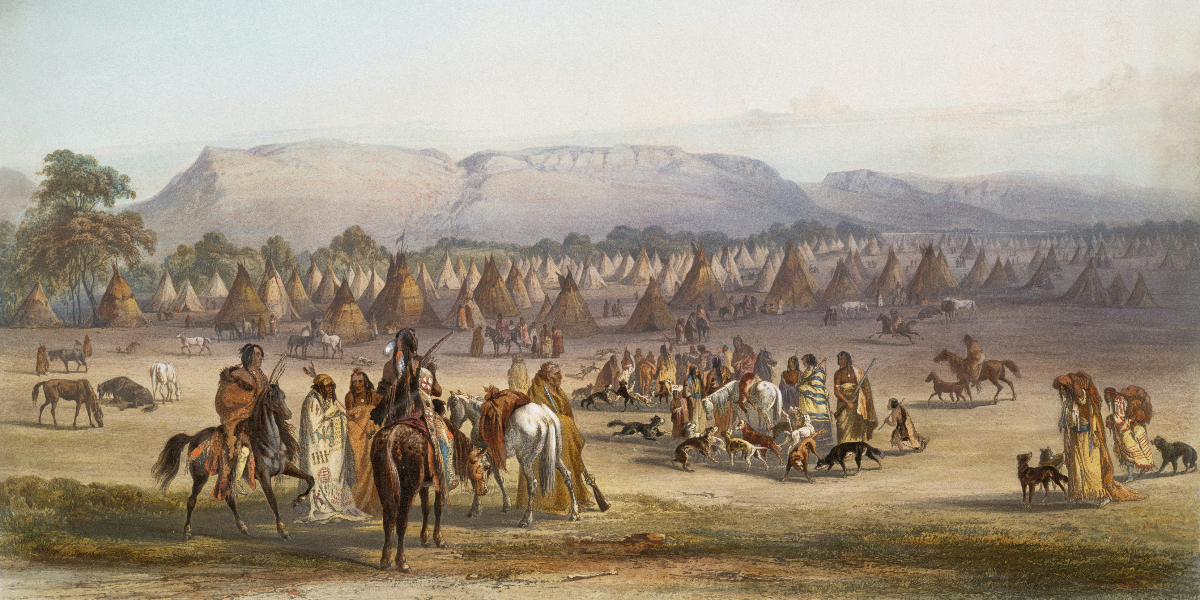
The violence with which Americans grapple right now, so often described as “senseless,” has deep roots—roots that can be traced back to the earliest days when Europeans first set foot in what they called the New World. Ta-Nehisi Coates has written that “race is the child of racism, not the father.” My book argues that violence is the ancestor to them both. American violence has a sense rather than a senselessness, and that sense is frontier violence: the theft of Native land, and the theft of first Black and Indigenous freedom and later immigrant labor.
It started as colonial policy. It became institutionalized in the American republic. And when the frontier officially closed in 1890, frontier violence broke—like a wave—on the Californian shore in two directions: half traveling overseas to Cuba, Puerto Rico, the Philippines, Korea, Vietnam, and Palestine, the other half breaking inwards: into American culture itself, expressing in our individual and collective behaviors.
In order to tell the story of that idea I had to enlist the help of history, journalism, and my own life—the experiences of my parents, in particular. As such, it is as deeply felt and deeply personal as it is an “idea book.”
2. There is no America—there are only Americas.
My mother was an Ojibwe Indian from the Leech Lake Reservation. She grew up in the 1940s and 1950s in a one-and-a-half-room cabin with no running water in the village of Bena. Her life was immeasurably hard in ways I can’t begin to imagine. She went on to become the first Native woman attorney in Minnesota and the first Native American woman federal judge in the country. But because of the hardships and poverty of her childhood, she carried a deep distrust of this country. If America had its way, she would have lived and died in some white woman’s kitchen. For her, this country would always do its worst.
“I had to enlist the help of history, journalism, and my own life—the experiences of my parents, in particular.”
My father was different. He was Jewish, born in Vienna in 1926. He escaped the Holocaust through Germany, Belgium, and England before finding refuge in the United States. In his own words, America saved his life. It was a place that sometimes lived up to its noblest ideals.
They were both right. And my book attempts to wrestle with that.
3. Learn to see differently in order to be different.
I am a father, a teacher, and a writer. And I’ve been lucky in all three categories. I’ve been fortunate in my children, my students, and my readers. The mission for helping all three is much the same. I would sum up that effort as trying to help people to see things differently in order to be, to act differently.
Unseeing, however, is a tricky business. There’s a story I like about an anthropologist who was studying an Amazonian tribe. The people told him that tribal leaders made collective decisions by taking a hallucinogenic drug and meeting one another in the astral plane, then returning to their communities to share the outcome. The anthropologist didn’t believe them, so he took the drug himself. When it took effect, he saw a kaleidoscope of colors, and then, gradually, a face appeared: Karl Marx. He concluded that the tribe’s method was false.
“Unseeing, however, is a tricky business.”
I think that’s the wrong conclusion. The right conclusion would have been: we see what we’re trained to see. As Americans, we have been trained to see ourselves, our history, and our shared violence in very specific ways. By learning to see things in new ways, there is hope for us to chart a new future for our country.
4. The past flows through people, not just textbooks.
History isn’t a list of names and dates, a concatenation of battles, the decisions of Congress, or the mess of presidential ego. History is a force that flows through time and through human beings. It registers itself in our decisions, our behaviors, our habits.
So really listen to your parents. Listen to how history—as a force—flows through them and into you. That’s the only way to truly understand them and truly understand yourself. If you’re lucky enough to have children, listen to them for the same reason. By tuning into what is behind the words of the people around you, to what supports those words and feelings and positions and agendas, you will hear nothing less than history itself.
My undergraduate thesis advisor was Toni Morrison. We stayed in touch after I graduated, visiting occasionally until her death in 2019. On what turned out to be our last visit, in 2018, at her home in Grandview-on-Hudson, she asked after my father. I told her he’d died a couple of years before. “Ahhh,” she said, “that’s too bad.” I confessed I’d tried to write about him but had never managed to do him justice. I mused aloud that maybe the problem was that the living are too evasive, too liquid, to come into focus—that it’s only the dead who sit still.
I don’t remember what she said in response. Except, eventually, she wanted to take my arm so I could walk her to the kitchen for some cake. I knew that sometime soon she would be gone, too. And I remember that she was patient with me, patient enough to let my ideas come out, and I learned as much in those silences as I did when she was speaking. Learn to miss your teachers before they’re gone. And be aware that our best teachers sometimes hide in plain sight. My kids, in their own way, are among mine.
5. Power is a verb.
For Native people, it can be a political trap to be nostalgic for a tribal past. I often think this is because the so-called “Native American Story” is largely, if not exclusively, told as tragedy. Once we were great, and then the Europeans came, and then we were great no more.
“The status quo can only be changed if we try to see things differently.”
This kind of tragic framework has problems beyond its inaccuracy. It reinforces the status quo. Aristotle wrote that tragedy is a dramatic form that creates feelings of pity and fear in the audience, which result in catharsis—an unburdening of emotion. But this doesn’t lead to change. The audience makes the mistake of thinking that feeling something powerful or profound is the same as political action or real-world change. But it’s not.
The status quo can only be changed if we try to see things differently. We do that by remembering that power—cultural, political, emotional—is not a “thing.” Power is not a noun. It is a verb. An action. A way of being that assumes nothing less than the shape of the world and the shape of the people who inhabit it. Since power is a process, not a thing, it continually needs to be expressed, and re-expressed. This also means it can be subverted, meddled with, redistributed, and bent—hopefully—to more just ends.
Enjoy our full library of Book Bites—read by the authors!—in the Next Big Idea App: