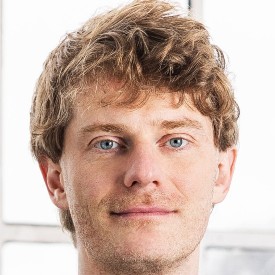












Below, Michelle Gielan shares five key insights from her new book, Resilient Optimism: The Science of Sustaining a Positive Mindset in Tough Times.
Michelle is a positive psychology researcher and former national CBS News anchor. She was the executive producer of The Happiness Advantage on PBS and a featured professor on Oprah Winfrey’s Happiness course.
What’s the Big Idea?
It’s easy to be optimistic at the beginning. At the start of a new job, a new relationship, or a new project, we’re energized, hopeful, and ready to go. But what happens when the first plan fails? When the challenge lasts longer than expected, or you’re simply exhausted? To sustain optimism when it’s tested, we need to understand it as a behavior.
Listen to the audio version of this Book Bite—read by Michelle herself—in the Next Big Idea App, or buy the book.

1. Optimism is a behavior, not a feeling.
One of the biggest misconceptions about optimism is that you either feel it or you don’t. But the days we need optimism most are often the exact days when we cannot summon the feeling.
I saw this with a leader named Mark, who was overseeing a massive renewable-energy launch when everything started falling apart. A safety test failed. Investors were furious. A competitor moved ahead. His team started blaming one another. He was sleeping less, working more, and slowly losing the optimism he’d always considered part of who he was.
We didn’t try to give Mark a pep talk. We built routines. He stopped answering work email after 8 p.m. Before bed, he wrote down three small, good things from the day. And every morning his team held a 15-minute Momentum meeting: one win from yesterday, one priority for today. Then, just as things were improving, a freak flood hit the plant and destroyed half their inventory. But something was different. The team now had routines for finding progress when circumstances were hard. They salvaged what they could, rerouted supply chains, solved problems together, and eventually launched.
We don’t wait for our emotions to pivot. We pivot our behavior, and our emotions can catch up. Optimism isn’t pretending everything will work out. It’s believing that what we do still matters—and then acting accordingly. Resilient optimism isn’t denial. It’s design.
2. Don’t start with what’s broken.
Our brains are incredibly good at finding problems. That’s useful if a tiger is chasing you. It’s less useful when you’re trying to lead a team, solve a complicated problem, or make it through a normal Tuesday.
A few years ago, Arianna Huffington and I conducted a study that changed the way I start my mornings. We exposed one group of people to just three minutes of negative news and another group to neutral content. Six to eight hours later—nearly an entire workday—the people who had watched the negative news were 27 percent more likely to report having had a negative day. Three minutes. It acted like a poison pill instead of a vitamin at breakfast.
“Our brains are incredibly good at finding problems.”
So we ran another study. This time, people read about a serious problem, but for half of them, we added information about possible solutions. Hours later, the people who had also been exposed to solutions performed about 20 percent better on unrelated problem-solving tasks. The problem itself hadn’t changed, but the information around the problem had.
We have been taught that positive change starts by identifying everything that’s broken and fixing it. But when the brain gets flooded with problems, it can actually become worse at solving them. The alternative is not to ignore the problem. It’s to give the brain a fuller picture. What’s working? What progress have we already made? What resources do we have? What is one possible path forward? One of my favorite practices is incredibly simple: at the end of the day, write down three things that worked. They can be tiny. You are essentially giving your brain evidence it might otherwise discard. Because problems aren’t the only facts in the room. Progress is information too.
3. Stress isn’t the problem. Misreading it is.
Most of us have been taught to think of stress as purely negative—something to reduce, eliminate, or escape. But stress is also information.
My husband, Shawn Achor, along with researchers Alia Crum and Peter Salovey, conducted a study with stressed managers at UBS. One group learned the traditional message about stress. Another group learned that the stress response can sometimes help us focus, grow, and perform. Four months later, stress had actually gone up for everybody because the bank was in the middle of a crisis. But the people who had learned to rethink stress reported a 23 percent drop in stress-related symptoms, including headaches, backaches, and fatigue. The stress was still there. Their relationship with it had changed.
One way I practice this is by asking, “What is my stress trying to tell me?” A mother I write about was furious when her teenage son came home more than 30 minutes late without answering her texts. She was ready to unload on him. Then she stopped and realized the emotion underneath her anger was fear. She was stressed because she loved him and wanted him safe. That changed how she responded. Instead of leading with anger, she explained why a simple text mattered. The next time he was late, he sent one.
Try finishing this sentence: “I’m stressed because _____ matters to me.” Stress often points toward something we value, whether that’s our family, our work, our standards, or our purpose. Once we decode the signal, we can choose what to do with the energy.
4. You cannot do everything—so choose what matters.
One of the fastest ways to drain optimism is to spend all day working incredibly hard while feeling like nothing important moved. Unfortunately, our brains make that very easy. We love small wins. Answer an email? Done. Check Slack? Done. Cross something off the list? Tiny dopamine hit. Meanwhile, the important work—the strategic thinking, the meaningful conversation, the project that could actually change something—keeps sliding to tomorrow.
I developed a practice I call Commitment Triage to interrupt that pattern. Take everything you’re doing and put it into three categories:
- Core Impact List – the work and relationships that create the greatest value.
- Secondary List – necessary things that support the important work.
- The Not-To-Do List – things you can delegate, delay, or delete.
I worked with a therapist who was running a thriving practice, raising two kids, managing a renovation, and feeling completely depleted. She had bought a beautiful new couch and what she wanted most was simply enough time to sit on it. After triaging her commitments, she streamlined some work, delegated payroll, changed how she handled scheduling, and recovered roughly four hours a week. She finally sat on the couch.
The point isn’t to become better at squeezing more into your life. It’s almost the opposite. Every yes out there is a no in here. Every commitment costs time, energy, attention, or presence somewhere else. Resilient optimists understand that protecting those resources isn’t selfish. It’s how we remain capable of doing the work—and loving the people—that matter most.
5. Your optimism never affects only you.
Optimism doesn’t stop at the edge of our own brain. It travels.
In my workplace research, nearly eight in 10 people describe themselves as optimists. But over time, people have become less likely to express that optimism. They encourage new ideas less often. They share good news less often. They begin conversations positively less often. And what’s striking is that criticism hasn’t dramatically increased. More often, encouragement has simply been replaced by silence. Optimism cannot influence a culture if nobody expresses it.
“Optimism is not only something we experience. It’s something we broadcast.”
Think about what happens when someone offers a new idea in a meeting and one person says, “That could actually work—tell me more.” The entire room now has a different piece of information. Or someone tells a colleague, “The way you simplified that presentation helped us make the decision.” That’s more powerful than “Great job.” It tells the person exactly what worked and what impact they had.
These moments can look trivial, but they aren’t. Culture gets built through thousands of small signals: what we notice, what we say out loud, what we reward, and what other people see us do. You don’t need a title to change the next interaction. You don’t need permission to encourage someone. You can simply create one positive dot—and give someone else something better to connect to. Optimism is not only something we experience. It’s something we broadcast. And sometimes one person going first is enough to change what happens next.
Enjoy our full library of Book Bites—read by the authors!—in the Next Big Idea App: