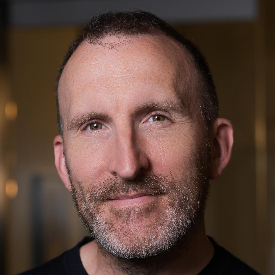









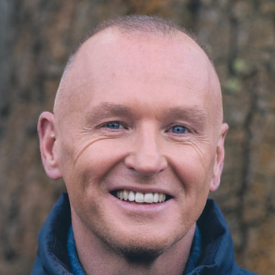
Below, Owen O’Kane shares five key insights from his new book, Addicted to Anxiety: How to Break the Habit.
Owen is a psychotherapist and former NHS Clinical Lead with over 30 years of experience in both physical and mental health.
What’s the big idea?
Freedom from anxiety comes less from fighting it and more from understanding, accepting, and skillfully responding to it.
Listen to the audio version of this Book Bite—read by Owen himself—in the Next Big Idea App, or buy the book.

1. Form a positive relationship with your anxiety.
This might sound like an odd suggestion because anxiety can feel negative, and people don’t typically have a good relationship with it. But practically speaking, your anxiety is trying to protect and support you. It’s a useful mechanism, but the difficulty is that it often goes too far.
I find it useful to think of anxiety as the anxious part of you, your anxious self. It may even be useful to think of it like the younger version of yourself that is a bit more scared. When you relate to your anxiety in this way—a little more like an observer—you’re more likely to be open, compassionate, and treat your anxiety in a different, friendlier way. If you treat anxiety like it’s an enemy, then that’s exactly what it will feel like. If you see it as a supportive ally that’s only trying to help, then you will work with it more productively.
The next time you’re having an anxiety episode, stop to think about this scared part of you. How do you treat it? Do you welcome it in? Can you allow it to be there? Can you move toward it? Can you treat it with openness? Can you treat it with compassion? And can you be open and curious about what it might be trying to teach you? Each time you do this, not only will your anxiety lighten, but your relationship with anxiety will improve considerably. Anxiety isn’t your enemy.
2. Becoming addicted to anxiety.
We often associate addiction with alcohol or drugs, but we don’t usually think of anxiety as an addiction. But over the years, I’ve seen thousands of people become addicted to the process of anxiety. They become addicted to the thoughts, emotions, and physiological sensations of it.
“Many people become dependent on worrying itself, because without it, life can feel too frightening.”
In short, anxiety becomes a habit you’ve come to rely on. What would happen if you stopped worrying? What would happen if you didn’t have those physiological sensations? What would happen if the emotions weren’t there anymore? Since anxieties are there with the intent of keeping us safe, it’s going to feel very difficult and scary to let that go as a part of your life.
Many people become dependent on worrying itself, because without it, life can feel too frightening. But you don’t need to be hooked on anxiety, because once you learn to interrupt and disrupt those patterns, then you regain freedom.
3. Take responsibility.
When we think about anxiety, we often think of it as something happening to us—a physiological state. To a large degree, that’s true, but we never stop to think about our role in perpetuating the anxiety. Now I want to be clear, this is not a judgment in any way, shape, or form. It’s an important conversation. We all sometimes play a part in maintaining our anxiety.
We contribute to our own anxiety by overthinking, overanalyzing, eating certain foods, lacking boundaries in our lives, or in our lifestyles in general. An important component of managing anxiety and learning to find freedom is stopping to ask:
- Am I looking after myself properly?
- Am I over-attached to my anxiety?
- Do I rely on my anxiety?
- Do I make choices that aggravate it rather than improve it?
Next time you stop to think about how you manage your anxiety, consider asking these questions that analyze your own responsibility, too. When you take responsibility, then you’re on the road to the freedom of becoming unaddicted to anxiety.
4. Deactivate the anxious body.
One of the first places we experience anxiety is within our bodies. This could be knots in your stomach, tension in your chest, or a lump in your throat. You might even feel nauseated or have a headache. It can play out in many ways for people. The important thing is that when you do recognize anxiety in your body, then you can do something about it.
Essentially, you’re carrying a state of threat within your body. If you can relax that state of threat, then you will automatically send a message to the brain, telling it that there isn’t any immediate danger.
“Essentially, you’re carrying a state of threat within your body.”
So the next time you notice that your body has gone into a state of alarm—when you feel tense, when you feel uptight, when you feel on guard—one of the most important priorities is to stop, acknowledge what’s happening, don’t try to fight the symptoms, allow them to be, and just create space for your body to quieten as much as possible. This will activate the brain’s prefrontal cortex and allow the mind to become much more rational, measured, and steady.
5. Anxiety and emotions.
Anxiety is an emotion that is rarely experienced on its own. It comes with other emotions such as fear, dread, overwhelm, or sadness. One of the challenges with emotions is that we often try to push them down and not feel them. That creates problems because of the backlog, and in the longer term, this can create very deep-rooted problems.
Next time you’re feeling anxious or are having a difficult emotion, remember that the emotion is allowed to be there. It needs to be there. Emotions are normal. Accepting the normality of emotions can be a powerful starting point. From there, you can start acknowledging that an emotion has a beginning, a middle, and an end. It’s an energy state that needs to flow through. By trying to stop the emotion, that energy gets blocked and trapped instead of passing on.
Learn to stand back, acknowledge the emotion, honor it, and give it permission to pass through. When you do this, you will notice that your mind quiets and you feel steadier. You will notice that you’ve responded to the emotion rather than pushed it away. This can be a powerful step in managing your anxiety.
Enjoy our full library of Book Bites—read by the authors!—in the Next Big Idea App: