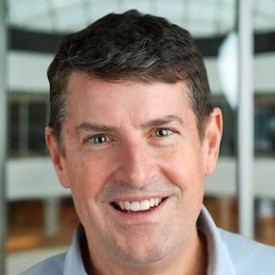












Below, Brad Stulberg shares five key insights from his new book, The Way of Excellence: A Guide to True Greatness and Deep Satisfaction in a Chaotic World.
Brad is on faculty at the University of Michigan. He is a performance coach and regularly contributes pieces about sustainable excellence to the New York Times. His work has also been featured in The Wall Street Journal and The Atlantic, among many other outlets. He serves as co-host of the podcast excellence, actually.
What’s the big idea?
What if excellence isn’t about winning, talent, or perfect conditions? Lasting performance and real fulfillment live in our curiosity, resilience, and love of the process.

1. The power of curiosity to fuel greatness.
Before Kobe Bryant’s tragic death, he was asked, “Do you love to win or do you hate to lose?” He responded, “I’m neither. I play to figure things out. I play to learn something.”
When you fixate on winning or losing or some other external outcome, it takes you out of the present. It makes it impossible to enter a flow state. It makes you fragile. But when you adopt a mindset of curiosity and growth, it relieves pressure and helps you stay anchored in the moment.
Kobe Bryant was known for his killer instinct—The Mamba Mentality—and yet, even he recognized the difference between the finite game and the infinite game. The finite game is time-bound; there are winners and losers. The infinite game knows no end; the only goal is to keep playing, keep learning, and keep discovering.
All the greats have had to learn that the infinite game is every bit as important as the finite one. Whether you play basketball or cello, repair cars, build tables, write books, or coach young people, your craft can be a vessel for self-discovery. We have a biological imperative to flourish, evolve, and grow. There’s no greater source of fulfillment and satisfaction than pushing yourself, pursuing a challenge, and developing along the way.
“The real cycle you’re working in is a cycle called yourself,” wrote Robert Pirsig, about his experience with motorcycle maintenance. “The machine that appears to be ‘out there’ and the person that appears to be ‘in here’ are not two separate things. They grow toward Quality or fall away from Quality together.” Excellence requires a hunger for growth—a deep curiosity to figure out what you’re capable of, a curiosity to better know your craft, and a curiosity to better know yourself.
2. The power of performing well, even when you don’t feel your best.
A surgeon that I have coached for a long time was called into an emergency case at two in the morning, and his goal was simple: save as much of someone’s leg as possible. My client was tired, and his mind was noisy. He felt off, and yet he took all that with him into the operating room and nailed the case anyway.
Something that we see over and over in the current culture is that people think they need to fix something before they can act. Now, you shouldn’t suppress or ignore your emotions. If you can do something to feel better, do it, but the truth is you can feel like crap and still perform well.
“It’s easy to do great work when everything is clicking, but excellence means being able to deliver even when it’s not.”
Often, it’s the act of getting started that shifts how you feel. It’s easy to do great work when everything is clicking, but excellence means being able to deliver even when it’s not. It’s saying, Okay, this might be harder than usual, but I can manage, and then you manage. The greats aren’t great because they always have perfect conditions to do meaningful work. The greats are great because they show up and give their best shot even when they don’t.
You could be a surgeon who didn’t get enough sleep, a student with a headache before a big exam, or an athlete who couldn’t get their usual pre-event meal. Those conditions aren’t ideal, but catastrophizing is worse. Too often, we spiral because we feel off, but the problem isn’t always the feeling. The problem is freaking out about the feeling. You can feel tired, stressed, unsure, and still deliver. You can put the not-so-great feelings or conditions in the passenger seat, take them along for the ride, and show up anyway.
The ability to remain calm amid challenges is a core element of what psychologists call self-efficacy, meaning an evidence-based belief that you are capable of showing up, working through challenges and excelling in uncertain or highly-charged circumstances. Decades of research show that individuals who score high in self-efficacy are better able to work through moments when they feel lost or stuck, be that in operating rooms, on playing fields, in the classroom, or in a boardroom.
One of the best things you can do for your confidence is to feel off and yet still perform well. It frees you from needing to have perfect conditions to give it a go. You give yourself the evidence that you are resilient, durable, robust, and can get the job done.
3. True discipline versus fake discipline.
True discipline bridges the gap between motivation and action, making the former less necessary for the latter. When you have discipline, you don’t need to feel a certain way to show up and get started. You just do.
Fake discipline is a chest-thumping, performative act of toughness. That’s not the real thing. The real thing is showing up for what matters and doing what you need to do. The irony is that when you do hard things that you don’t feel like doing in the short run, you usually end up feeling better in the long run.
“The real thing is showing up for what matters and doing what you need to do.”
Fake discipline is loud, performative, and wants everyone to pay attention to it. Real discipline is quiet because it’s too busy getting what you need to get things done, rather than parading around.
4. The 48-hour rule.
Whether you succeed or fail, give yourself 48 hours to celebrate the victory or grieve the defeat. Then, get back to doing the work. Results are an emotional roller coaster, but the work doesn’t change. Neurons that fire together wire together. It’s easy to get addicted to the high of external validation or become consumed by the low of failure. You want to avoid this trap at all costs. It’s kryptonite for sustaining high performance. Doing the work has a special way of putting both success and failure into their respective places.
The work itself doesn’t change nearly as fast as our emotions—win or lose. Great day or terrible day, the blank page is still the blank page. A lap in the pool is still 25 meters. The classroom still needs to be taught. The pregame speech still needs to be given. Returning to the work keeps our focus rooted in the process, not the outcome. It reminds us of why we committed to our crafts in the first place.
The work is the win. It’s the best medicine. 48 hours is an arbitrary amount that you can stretch or shrink to suit you, but the concept still stands. It ensures that we don’t become overly attached to success or failure, each of which comes with its own trappings.
5. Fulfillment and joy versus external achievement.
Matthew Perry was one of four actors to ever have a number one movie and TV series. During that time, he dated Julia Roberts, bought the oceanfront house of his dreams, and made $1 million per episode of Friends. But as he repeatedly wrote in his memoir, none of it was enough.
You can have it all, but there is no greater trap than thinking external achievement will fulfill you. The neurochemicals associated with wanting dopamine are much stronger than the ones associated with liking serotonin. The human brain is wired to want more. It’s how we evolved. We are suckers for the chase. We struggle to be content.
“The only Zen you’re going to find on top of the mountain is the Zen that you bring up there along the way.”
We all have holes we’re trying to fill, but no achievement, income, fancy watch, or substance is going to fill those holes in any meaningful way. Researchers call this the arrival fallacy, and recognizing it is liberating because you can stop expecting the next accomplishment to make you feel like a finished product. You can turn your attention to the process, finding joy, energy, and fulfillment in the work, rather than in the illusion of what might happen if or when you arrive.
In his 2022 memoir, Perry wrote, “I’m certain that I got famous so I would not waste my entire life trying to get famous. You have to get famous to know that it’s not the answer. And nobody who is not famous will ever truly believe that.” The trap of fame status doesn’t just affect actors. It affects artists, musicians, entrepreneurs, writers, bakers, athletes, knowledge workers, teachers, coaches—many of whom have made it to the proverbial mountaintop. It affects all of us.
If you can’t find joy and fulfillment in the climb, none of it is going to matter. The only Zen you’re going to find on top of the mountain is the Zen that you bring up there along the way. The only place you’re going to find the love you are looking for is by losing yourself in meaningful pursuits, expressing your innate gifts and creativity, and walking the path with good people. That’s what excellence is all about.
Enjoy our full library of Book Bites—read by the authors!—in the Next Big Idea App: