










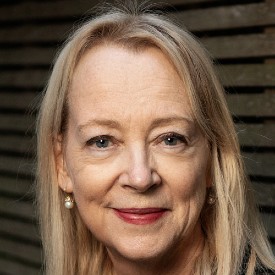
Below, Lynda Gratton shares five key insights from her new book, Living the 100-Year Life: How to Build a Career That Lasts and a Life You Love.
Lynda is Professor of Management Practice at London Business School where she co-directs The SARI Foundation Institute for Work, Careers and Longevity. She is also a fellow of the World Economic Forum.
What’s the Big Idea?
A longer life requires a new way of thinking about how we work, grow, and change. Instead of following a fixed path or constantly striving upward, we need to actively weave a life that can evolve over decades, strengthening what matters through small choices today that our future selves will thank us for.
Listen to the audio version of this Book Bite—read by Lynda herself—in the Next Big Idea App, or buy the book.

1. A longer life is a gift—but it changes the rules.
Ten years ago, when I wrote The 100-Year Life, I was trying to draw attention to the fact that we are being given more time. Many of us can now contemplate living into our nineties and beyond. That’s an extraordinary gift. But those extra years are reshaping adulthood.
Think about the life structure many of us inherited: Learn when you’re young, work through adulthood, and retire sometime in your sixties. For a while, that was a reliable three-stage timetable for life, but that timetable was designed for shorter lives.
If you’re going to live to 90 or 100, you may have a working life stretching across five or six decades. And you can’t simply take the old working life and stretch it for another twenty years. Think about how much will change over that time. Technology will change. The skills that make you valuable will change. Your family and relationships will change. What you want from work will change. And, of course, you will change.
Longevity is not primarily a story about old age. It’s a story about the whole of life. My question is no longer: What happens when we live longer? Now I hear a different question: What do I do with all that time?
2. Stop climbing. Start weaving.
For much of our working lives, we’ve been given a very powerful image of success: the career ladder. And the great thing about a ladder is that you always know you’re supposed to go up. You start somewhere near the bottom and move from one rung to the next, be that the next job, promotion, or level of responsibility. The ladder even tells you how quickly you should be moving. You look around at people of roughly the same age and stage and see how they’re doing. Am I ahead? Am I behind? Am I keeping up?
“Imagine the fabric of your life gradually taking shape over many decades.”
In many ways, the ladder made decisions for us. But that model becomes harder to sustain across a working life that could last fifty or sixty years. There may be periods when you want to move upward, but there may also be times when you want to move sideways—deepen your expertise, step back, learn something completely new, or change direction altogether.
It’s time for a different image. A long life looks less like a ladder and more like something woven. Imagine the fabric of your life gradually taking shape over many decades. Every experience, relationship, and choice becomes part of that fabric. And you are the weaver.
I see eight threads running through this weave:
- Mastery
- Cooperation
- Knowing
- Amplifying
- Friendship
- Intimacy
- Calm
- Adventure
The first four are about remaining productive, while the final four nurture and sustain us. We need both because, over a long life, success cannot simply be about how far you climb. It is also about the relationships you sustain, the things you continue to learn, the experiences that stretch you, the calm you create, and the people you love. So perhaps the question is no longer: How high have I climbed? It’s: What am I weaving?
3. You can’t live a 100-year life on autopilot.
When lives were shorter and careers more predictable, many choices were made for us. There was a fairly clear route through education, work, and retirement. That’s changing. And when there is no longer a predetermined route, we have to become more active in shaping our own lives.
You can’t live a 100-year life on autopilot. For me, that means periodically stepping back and asking three questions:
- Who am I? What has shaped me? What am I good at? What matters to me? What have I learned about myself from the life I’ve already lived?
- Where am I now? Which of the eight threads of life are strong? Which are weakening? Where am I putting my time and attention?
- What actions should I take now? Are there promise to make to my future self?
I’ve never believed in the idea of a perfectly balanced life. There will be periods when Mastery absorbs enormous amounts of your attention. There may be times when Friendship or Adventure recedes. That’s part of living. The danger is when a thread remains fragile for so long that it begins to unravel. A friendship neglected for years can become difficult to rebuild. A capacity we stop developing can be hard to recover. And a life without enough Calm can make it difficult even to see what is happening to the other threads. So, the second question isn’t: Is my life perfectly balanced? It’s: What is the fabric of my life telling me?
And the third question is what it means to come off autopilot. It doesn’t mean controlling every aspect of your future. It means paying attention. Noticing where you are. Making choices about what deserves your time and energy. And taking greater responsibility for the life you’re creating.
4. Don’t reinvent yourself. Take one small action.
When people start thinking about a 100-year life, it’s easy to feel overwhelmed. If I’m going to live longer, work longer, and take more responsibility for shaping my own life, does that mean I need to rethink everything?
Give yourself 15 minutes. Make a cup of coffee. Step away from everything demanding your attention and ask yourself: What needs my attention right now? You don’t have to tackle all eight threads of life at once. Choose one.
Perhaps Calm has become fragile. Don’t decide that you’re going to transform your life and meditate for an hour every morning. Go for a walk tomorrow. Go for a swim. Take an hour without your phone.
“You don’t have to tackle all eight threads of life at once.”
Perhaps it’s Friendship. Call someone you care about and talk to them for eight minutes. Eight minutes is long enough to get beyond “Hi, how are you?” but short enough not to become another overwhelming commitment.
That’s how we strengthen the threads. Not necessarily through dramatic acts of reinvention, but through small actions that we repeat over time. We tend to imagine change as a big event, but renewal can begin much more quietly. A conversation. A walk. Learning something new. Trying a small experiment. Spending time with somebody who sees the world differently from you.
One small action changes something. And that change can create another possibility. Over a life of 90 or 100 years, those small choices accumulate. Gradually, they become part of the fabric we’re weaving. Begin designing your 100-year life by asking: What’s one thing I could do tomorrow?
5. Make a promise to your future self.
Imagine yourself 20 or 30 years from now. What do you see for your Future self? Your Hoped-for Self. Your Expected Self. Your Feared Self.
When I was young, I remember trying to imagine myself at university. I’d never been to a university, so I had very little idea what that future life would actually be like. But I could imagine what I would wear. I had this wonderful image of myself in a long green velvet cape sweeping through the corridors of the school. I made that cape, and it became a tiny symbol of my Hoped-for Self.
I have a Feared Future Self. I don’t want to become an older woman who falls, breaks a hip and loses her independence. So, two or three times a week, I do Pilates. That’s a very small action for my Self today, but it’s a much bigger action for the person I will be twenty years from now.
The person you become is being shaped, in part, by the choices you’re making now. So occasionally I think it’s worth turning the question around. Instead of asking only, What do I want from my future? Ask: What does my future self want from me?
“A long life gives us more time, but our future selves don’t inherit that time untouched.”
Perhaps your future self will say: keep learning, look after your body, don’t lose your curiosity, make sure you have friends, go on adventures. I suspect that for many of us, our future selves will ask for some very simple things.
Imagine yourself at 80 or 90. Who do you hope will still be sitting around the table with you? What stories do you hope you’ll be able to tell? What will you be glad you made time for? A long life gives us more time, but our future selves don’t inherit that time untouched. They inherit the consequences of what we do with it.
So perhaps the most important question isn’t: What should I do next? It’s: What promise am I making to my future self?
Enjoy our full library of Book Bites—read by the authors!—in the Next Big Idea App: