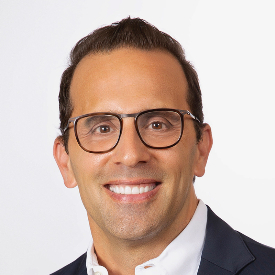












Below, Alvin Roth shares five key insights from his new book, Moral Economics: From Prostitution to Organ Sales, What Controversial Transactions Reveal About How Markets Work.
Alvin is the Craig and Susan McCaw Professor of Economics at Stanford University and the George Gund Professor of Economics and Business Administration Emeritus at Harvard University. A pioneering expert in the field of market design, he was awarded the Nobel Prize in Economics in 2012. He is also a member of the National Academy of Sciences and past president of the American Economic Association.
What’s the big idea?
There’s an old joke about economics and sociology that says economists try to understand the choices people make, and sociologists try to understand why people don’t really have any choices. Alvin looks at how societies try to decide whether to allow some choices and ban others.
Listen to the audio version of this Book Bite—read by Alvin himself—in the Next Big Idea App, or buy the book.

1. Morally contested markets.
There are lots of morally contested markets and transactions that some people would like to engage in, but others think shouldn’t be allowed. Often, the objections are stated in terms of moral or religious reasons. And the transactions that the opponents seek to ban don’t harm them personally—they might not even know the transactions had occurred unless someone tells them.
For example, same-sex marriage is a morally contested transaction: two people want to marry each other, and some other people don’t think same-sex marriages should be allowed—even though you can’t tell if someone is married unless they tell you, for instance, by wearing a wedding ring. For centuries, marriage was regarded as inherently heterosexual. But, after considerable controversy, the U.S. and many other countries have legalized same-sex unions.
This isn’t a unique situation. Lots of controversial markets are connected to reproduction. There have been bans at different times and places on contraceptives, in vitro fertilization, abortion, and surrogacy. That is, there have been laws enshrining opposing views about whether a woman should be able to prevent becoming pregnant during sex (by buying contraception), should be able to initiate a pregnancy without sexual intercourse (via IVF), or be able to terminate a pregnancy via abortion, not to mention being a surrogate or having a surrogate bear a baby. In the U.S., all those things have been through the courts multiple times and with different results.
Notice that reliable contraception and IVF involve modern disputes about modern technologies. Before reliable contraception, sex between a man and a woman often resulted in pregnancy, and before assisted reproductive technology, like IVF, sex was the only avenue to pregnancy. Many traditional laws and norms that attempted to keep sex within the bounds of marriage between a man and a woman were attempts to ensure that babies would be born into families. But if pregnancy becomes a choice, and if there are other ways to have a child than intercourse between a man and a woman, then the door opens to more expansive views about who can have sex with whom, and who can start a family. So, while expanding marriage to include same-sex couples doesn’t depend on modern technology, we can see that the changes in reproductive technology may have moved the needle on what kinds of marriages and related transactions receive social support.
Of course, bans on extra-marital sex, prostitution, or abortion never succeeded in making those things disappear, even though they raised barriers.
2. Bans on markets need social support to work well.
Some bans work well while others give rise to active black markets. For example, why is it so easy to buy drugs, but so hard to hire a hitman? U.S. laws aren’t so different for drug dealers and hitmen: if we catch them, we send them to prison for a long time. Yet our prisons are filled with drug dealers, and there have been years in which more than 100,000 people died from opioid overdoses. But murder for hire is so rare that it doesn’t even make it into the national crime statistics, and homicides from any cause are vastly fewer than drug overdose deaths.
At least some of the difference has to do with how people think about drugs and murder. If I told you I was looking to buy some heroin, you would be surprised, but you wouldn’t call the police (and if you did, they would tell you that they were busy with more pressing calls). But if I told you I was looking to hire a killer, you might very well call the police, and when you did, they would encourage you to tell me that I might find an available hitman at a certain bar, where I would find myself trying to hire an undercover detective. To put it another way, there are neighborhoods where drugs are readily available, and the neighbors look away, but not so many neighborhoods where killers are the norm, in part reflecting that the social norm against drugs is much more porous than against murder.
“At least some of the difference has to do with how people think about drugs and murder.”
I don’t know how we should best make progress in dealing with the markets for addictive, lethal drugs. Not only are we losing the “War on Drugs,” but it won’t even accept our surrender: experiments with decriminalizing drug use have shown the potential to make cities less livable. We’re going to need to experiment, to find better ways to proceed.
It’s worth noticing that we’ve learned to live with legal markets for tobacco and alcohol, even though each of those causes more deaths than are due to drug overdoses. And we’re wrestling with some other kinds of addiction, such as gambling (particularly on your phone, during a game).
The drug epidemic teaches us that well-intentioned policies can fail. By and large no one approves of heroin, but we haven’t succeeded in vanquishing it any more than we succeeded in making alcohol disappear during Prohibition.
3. Moral intuitions aren’t enough by themselves.
We need to gather and pay attention to evidence about the consequences of particular policies. This is hard when moral intuitions collide, partly because much moral argumentation rests on weak or no evidence. But we can’t afford to judge our policies just by their intentions. We have to at least look at their consequences, too.
Nevertheless, moral intuitions are important and consequential, so we need to understand them better. There are some things that many moral intuitions have in common. For example, concern about the possible exploitation of vulnerable people is often an issue.
4. Sometimes adding money to a transaction arouses repugnance.
For example, paying in cash is what turns sex into prostitution. Often, the objection to introducing money into transactions is that it might be an undue influence that could coerce the poor into transactions that they (or we) would prefer not to take part in. But that’s over-broad: many people work for financial pay at jobs they wouldn’t otherwise do. And many goods and services that we need wouldn’t be available if they couldn’t be paid for.
“Many people work for financial pay at jobs they wouldn’t otherwise do.”
Pharmaceuticals made from blood plasma are a good example. Many countries ban payments to plasma donors and try (almost always unsuccessfully) to generate as much as they need of the large amounts of plasma required to treat many diseases from unpaid donors. How do they make up for the shortfall? Fortunately, you can buy plasma and plasma-derived medicines from the U.S. We’re the Saudi Arabia of blood plasma, exporting tens of billions of dollars of plasma products each year, collected largely from plasma donors who are paid.
5. Religion remains important in many controversies.
It plays a large role in the growth of legal medical aid in dying, in the U.S. and elsewhere.
Overall, in pursuing moral economics, we have to keep in mind the maxim that ought implies can, and the things we feel morally obligated to do, whether by supporting them or banning them, have to be things that we can do. To understand those limits, we need evidence, including experimentation, to figure out how to proceed when we’re worried by all our options.
Enjoy our full library of Book Bites—read by the authors!—in the Next Big Idea App: