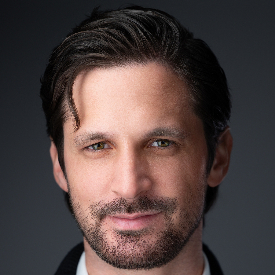












Below, Dr. Itamar Shatz shares five key insights from his new book, Solving Procrastination: The Science of Why We Put Things Off and How to (Finally!) Stop.
Itamar is an Affiliated Lecturer at Cambridge University. He helps people understand why they procrastinate and how to stop, using a practical system that he developed from over 500 scientific studies.
What’s the Big Idea?
Procrastination isn’t a failure of time management or a sign that we don’t care. It’s a psychological tug-of-war between what we intend to do and what feels easier or better right now. To stop procrastinating, we need to understand what’s driving our particular pattern of delay and use strategies that address the real cause, rather than relying on willpower.
Listen to the audio version of this Book Bite—read by Itamar himself—in the Next Big Idea App, or buy the book.

1. Procrastinators care more, not less.
Procrastination involves an intention-action gap between the beneficial things we mean to do and the problematic things we actually do.
You’ve probably experienced this yourself if there was ever something you truly wanted and intended to do, but found yourself putting off, again and again, each time telling yourself that you’ll do it in “tomorrow,” or “soon,” or “in just five minutes,” even if deep down you want to shake yourself and yell “JUST DO IT ALREADY.”
The usual problem in cases like these isn’t that you don’t care about the things you should be doing, but that you have paralyzing perfectionism from caring too much.
That’s why procrastination is an issue not only when it comes to unpleasant tasks, like many people think, but also on activities we’re genuinely excited about. And it’s why we procrastinate not only on stuff that doesn’t matter, but also on activities that can have serious consequences.
“The right number of mistakes in your work isn’t zero.”
To avoid this pitfall, it’s important to replace perfectionism with good enough, which can actually be quite good. Then, remind yourself that the right number of mistakes in your work isn’t zero, and focus on your own standards (rather than those set by others).
2. We procrastinate to pursue immediate pleasure and avoid immediate pain.
The misconception that procrastination is just about time management or motivation leads us to try solving it with the wrong tools, which guarantees we’ll fail.
Time-management is usually a symptom of procrastination, rather than its cause. We can have excellent time-management skills and still end up procrastinating because we’re not addressing the real cause. No matter how much planning we do or how many time-management apps we use, even the most meticulous schedule won’t work if we can’t actually bring ourselves to follow it when the chips are down.
If we want to stop procrastinating, we need to take back control of our mind and find ways to strengthen our drive to act, or weaken our drive to delay. Fortunately, several techniques can help, like ditching big goals in favor of attainable ones, taking extra breaks when we need to rest, and riding the waves of our productivity rhythms.
3. Our brain is great at tricking us into thinking that next time will be different.
The biggest issue is the self-control fallacy: our mistaken belief that if we just try harder, we’ll manage to do what we need to through sheer willpower, even though this exact approach has failed us many times before. It’s a tempting notion, because it offers a clear and straightforward solution that seems believable—until it’s time to act. This approach rarely helps us win our internal tug-of-war.
“We need to take back control of our mind and find ways to strengthen our drive to act.”
To see through this trick, use the reality rule, by asking yourself what you’re actually likely to do, based on what you did in similar situations before, rather than on how you wish you’ll act. That way, you can adjust accordingly and find new solutions that could actually help, instead of trying the same things and getting the same results.
4. Procrastination is more varied than people think.
There’s no single strategy that everyone should always use to overcome their procrastination. A college student who’s procrastinating because of distractions should use different strategies than an artist who’s procrastinating because of perfectionism, as should an executive who’s procrastinating because of burnout, and so on.
To overcome your procrastination, it’s important to figure out why you procrastinate. You’ll often need to dig through several layers before you get to the reasons you should focus on addressing; an example is when it seems you’re getting distracted by social media, but really you’re stuck because your self-confidence is low.
To help make sense of your procrastination, you can consider when, where, and how you do it, and what the difference is between cases where you procrastinate versus ones when you take action. You can also consider the different procrastinator archetypes—like the Worrier, Zigzagger, and Rebel—and see which ones resonate with you the most. This is great both for figuring out why you procrastinate, and for finding the best ways to stop.
5. Procrastination might be growing more common, but it has ancient roots.
To overcome procrastination, we need to address modern risks, like the increasing bombardment of digital distractions, steep rise in unstructured work, and climbing rates of anxiety.
“Procrastination is rooted deep in our psychology.”
But, although it’s tempting to think of procrastination as a purely modern problem, people have been battling it throughout history. That’s why we have warnings from almost three thousand years ago, saying that “a man who puts off work is always at hand-grips with ruin.”
The issue is that procrastination is rooted deep in our psychology, and specifically in an impulsive fight-or-flight response that we’re wired to engage in. Fortunately, we can seize control of this response by empathizing with our future self to make us care more about what will happen to us. And we can also shine a bright light on our fears (the real ones driving our behavior, rather than just those that lie on the surface) by asking what they are, how likely they are to happen, and how we can successfully move on if they do.
Enjoy our full library of Book Bites—read by the authors!—in the Next Big Idea App: